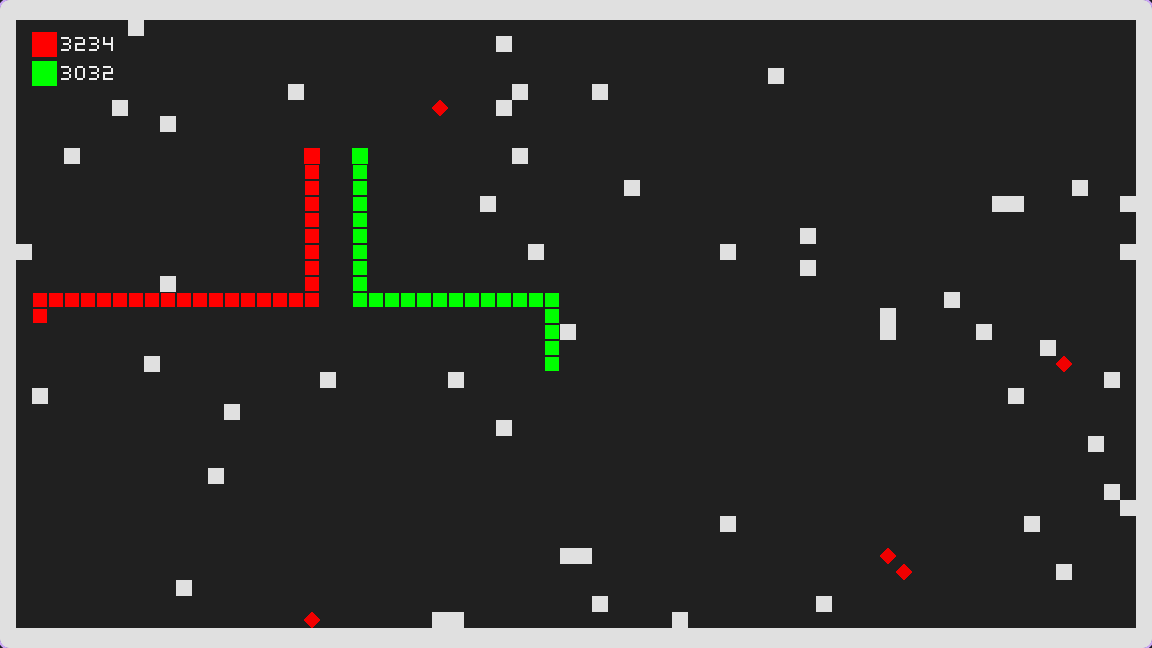
GD Snake is a fully featured implementation of the classic Snake game, built using the Godot game engine. The aim of the project was primarily a learning experience for game development and how to use the Godot game engine. So it implements all features of a full sized game, just applied to the smaller scope of Snake.
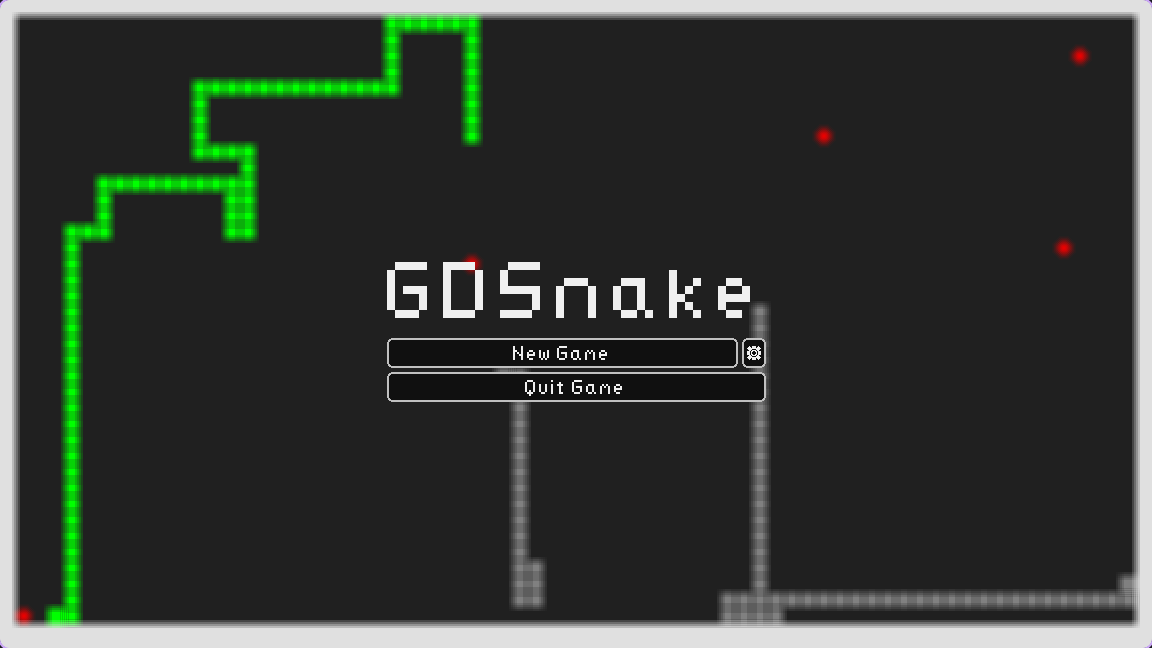
The main menu, includes a real-time game of snake running in the background using AI snakes, to provide visual interest while the user is in the menus. Along with a standard settings allowing for the adjusting audio levels (which is persisted) and dynamic rebinding controls. The game includes a palettes swap shader allowing for multiple themes and styles to be easily applied to the full game, and includes a selection a builtin color palettes the user can pick from.
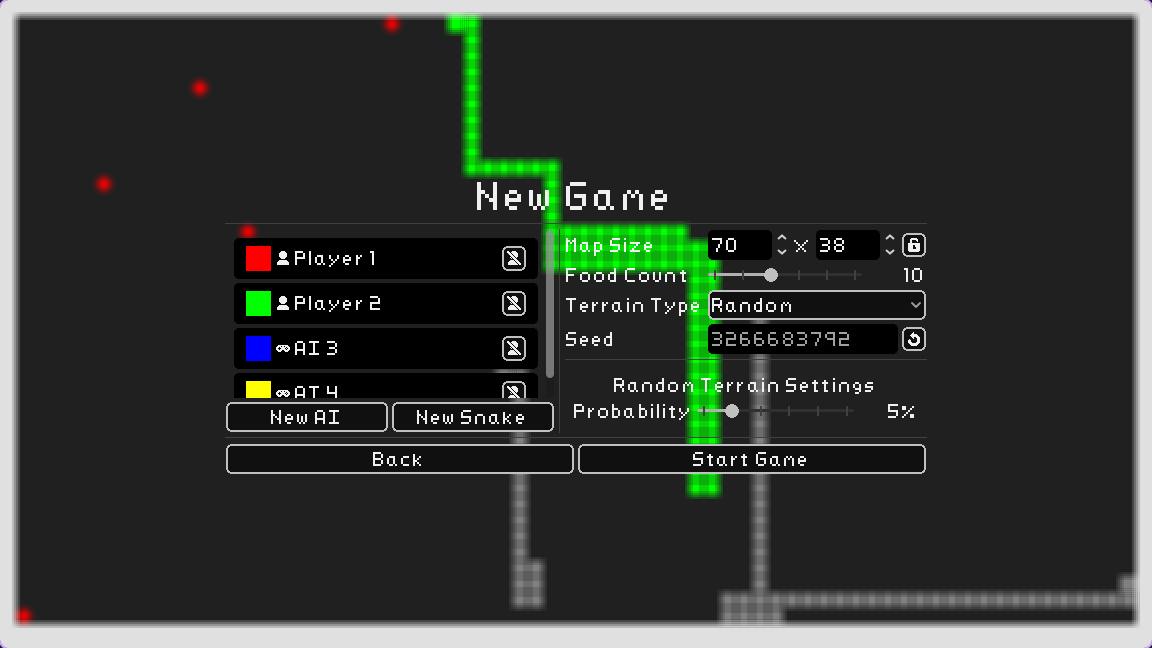
The game itself supports arbitrary number of AI opponents and up to four players. The initial spawn points for the snakes are guaranteed to be spaced out in the selected map so that there isn’t immediate contention when the game starts. The map size can also be arbitrary large or small, when the map is too large to fit on a single screen then a camera follows the snake, the zoom of which can be controlled in the settings. When multiple players are in the game, then it supports split screen so each player has their own camera. The map can also include optional obstacles, which place walls throughout the map which breaks up the open space and requires more strategy to work around and plan ahead to avoid.
AI is implemented using a simplified A* pathfinding algorithm, which allows the AI snakes to navigate the map and avoid obstacles while trying to get to the food. A* alone tends to be too good at navigating the map, so to make the AI more human like and less perfect, a random chance of making a suboptimal move is added to the AI. This allows for more interesting games where the AI can make mistakes and be beaten by the player, while still being good enough to provide a challenge.
Finally the game also includes both background music tracks, and sound effects to provide more user feedback when actions occurs.
Although simple, this implementation of snake covers user input (and accessibility through rebinding controls), graphics, AI, menus, persistent/save data, and music and sound effects. And through the development of this game I have gained a better understanding of these different pieces and how to fit them together into a larger project.