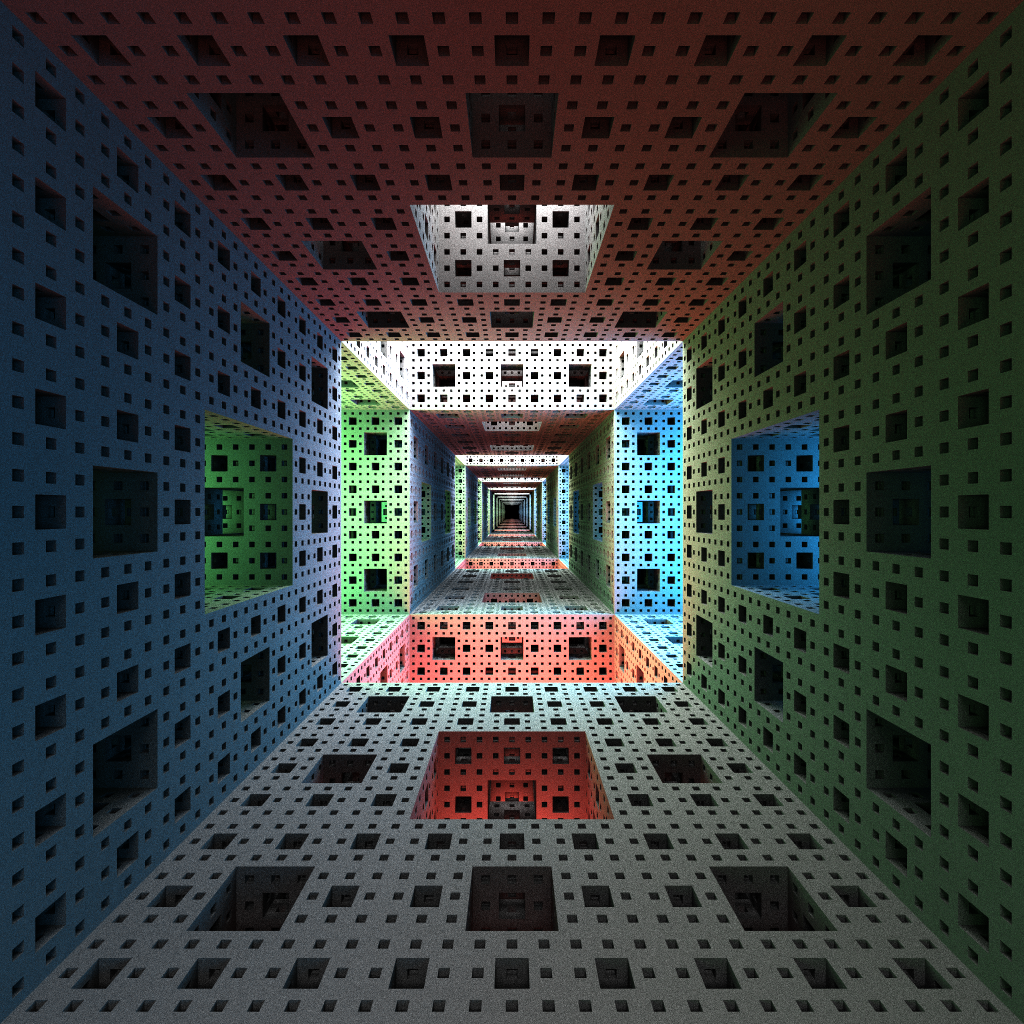
Tiny Ray March v2 is a reworking of the previous version of TRM v1, with an emphasis on data collection to analytically quantify the quality and performance improvements of different features. It is designed as a simple and lightweight ray marcher for educational purposes and as a test platform for understanding ray marching and the performance improvements that come from various features.
TRM is written as a C++ library, and the scene definition is a C++ structure which can be either statically defined in a runtime, or dynamically created by a runtime. It implements a minimal set of features initially, and only supports a small set of material types (Emissive, Diffuse, Specular, Refractive, and Fresnel). And as more features are implemented, the performance and quality improvements of each feature are tested with the included example scenes, and the results are recorded in a spreadsheet for analysis.
Statistical Analysis
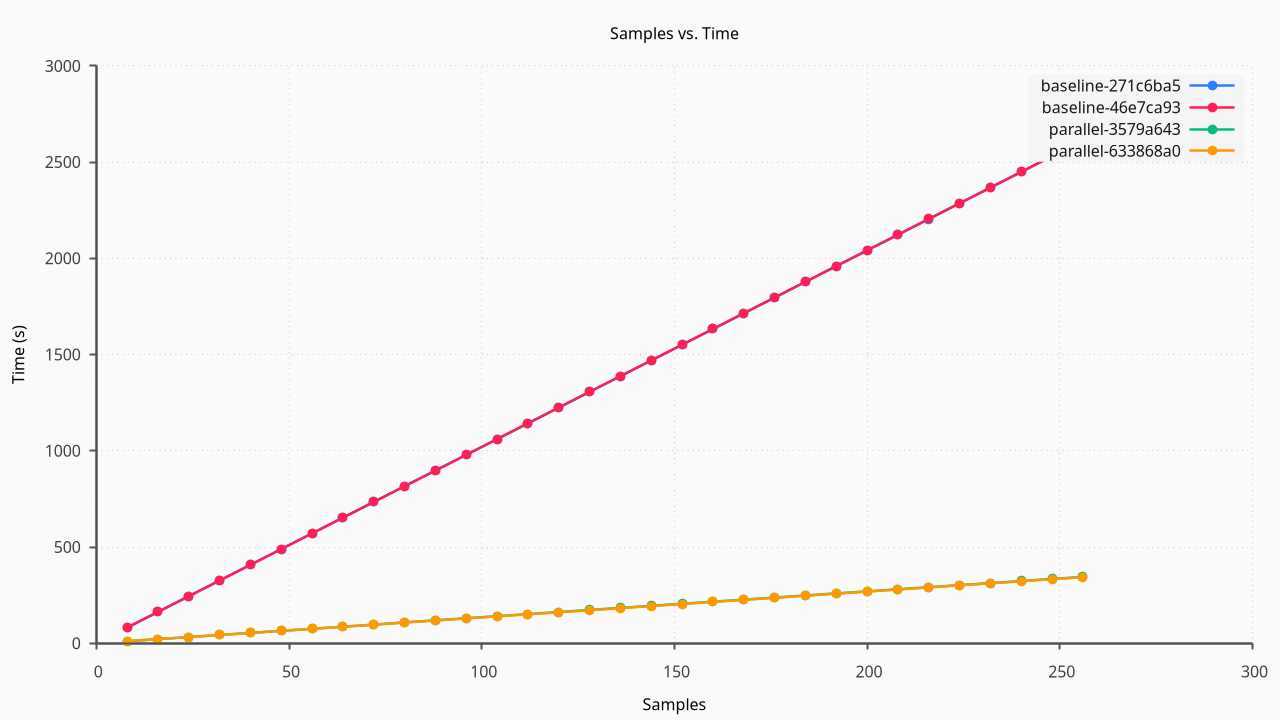
There are two main aspects that are being analyzed as part of this project. The first being the performance, the time it takes to render each scene with varying number of samples. More complex scenes will take longer to render per-sample and more samples tends to linearly increase the time to render a scene.
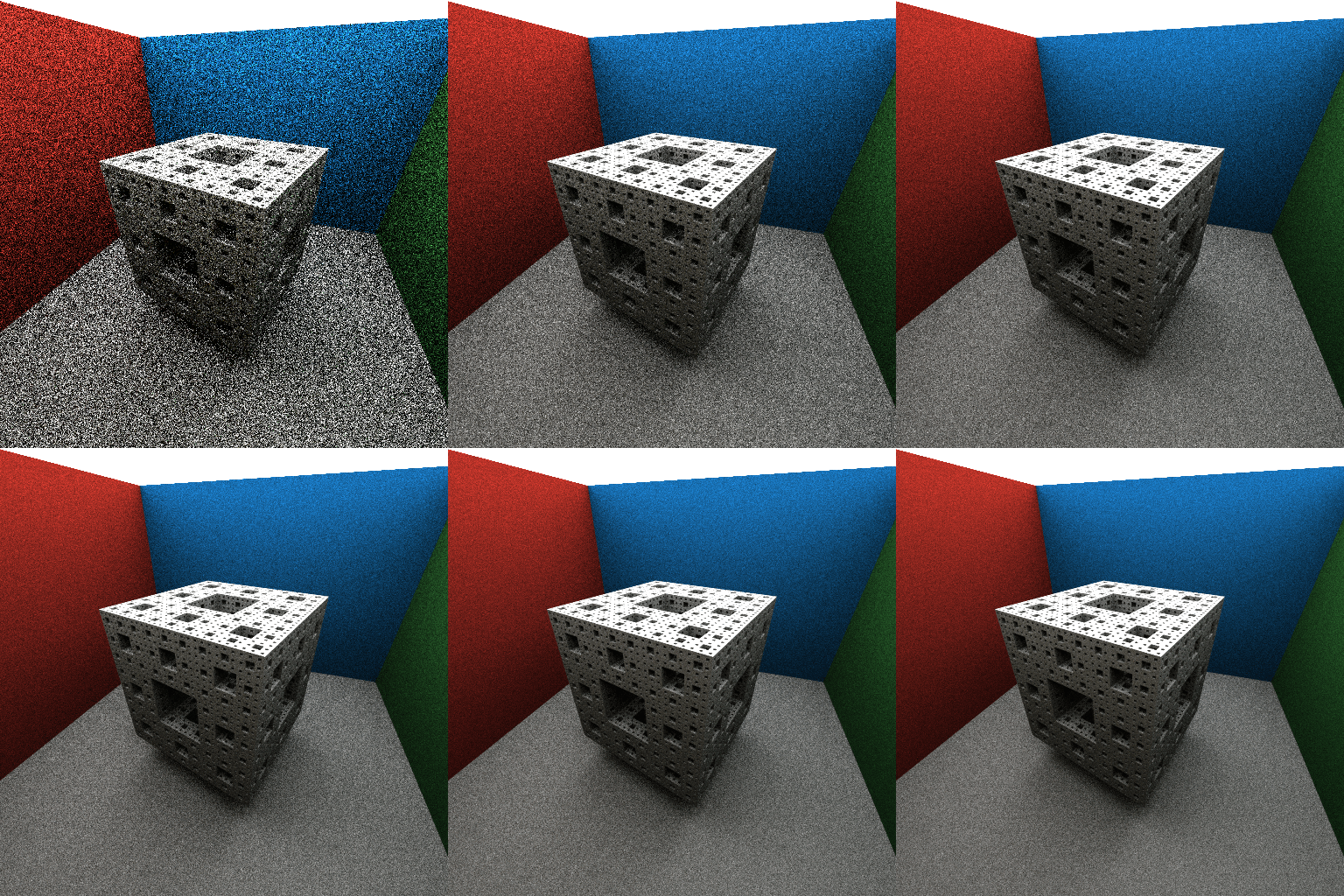
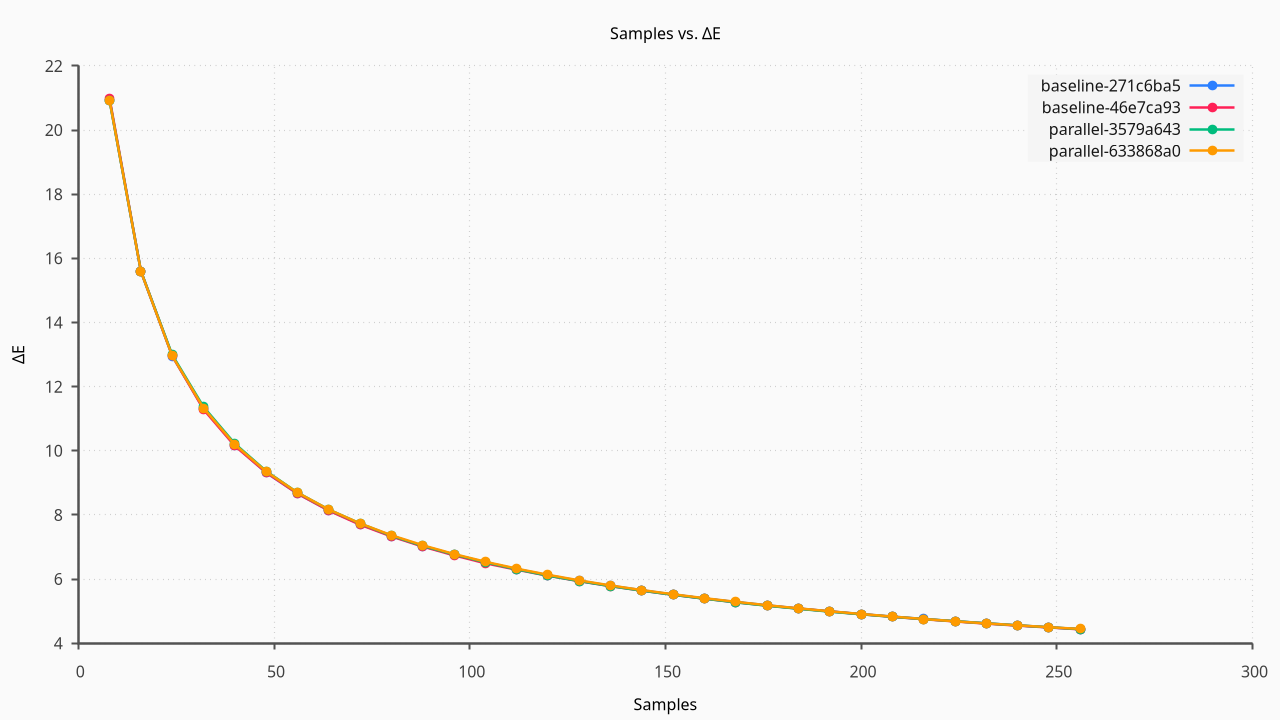
The second aspect is the convergence towards the global truth. Photorealistic rendering through ray tracing or ray marching attempts to simulate the path of photons through a scene. However, it is not possible to simulate all the photons, so through clever statistical sampling we attempt to capture the scene while only simulating a small fraction of the light. This statistical sampling means that with more samples we expect to eventually converge towards “reality” by sampling more and more rays of light. So the second measurement is how quickly we converge towards the accurate output, and how effectively are we sampling the most important rays of light.
This measurement of convergence is harder to quantify, we approximate it by rendering a final extremely high-quality image using a much higher number of samples ($\sim1024$). Then re-rendering the same scene using a different seed and saving snapshots at fixed intervals. Then for each snapshot we compute the average $\Delta E$ (CIE76) difference between the snapshot and the high-quality “final” image. That $\Delta E$ value is the measure of perceptual difference between the two images, allowing for small differences that are not noticeable by humans. And by comparing the rate of decrease for the $\Delta E$ we get an approximation for the rate at which the image is converging to the ground truth.
For a single color a $\Delta E \leq 2$ is considered to be an imperceptible difference. Since this data is the average for each individual pixel this isn’t as accurate but it is a convinient baseline to understand when viewing the statistics.
Sample Scenes
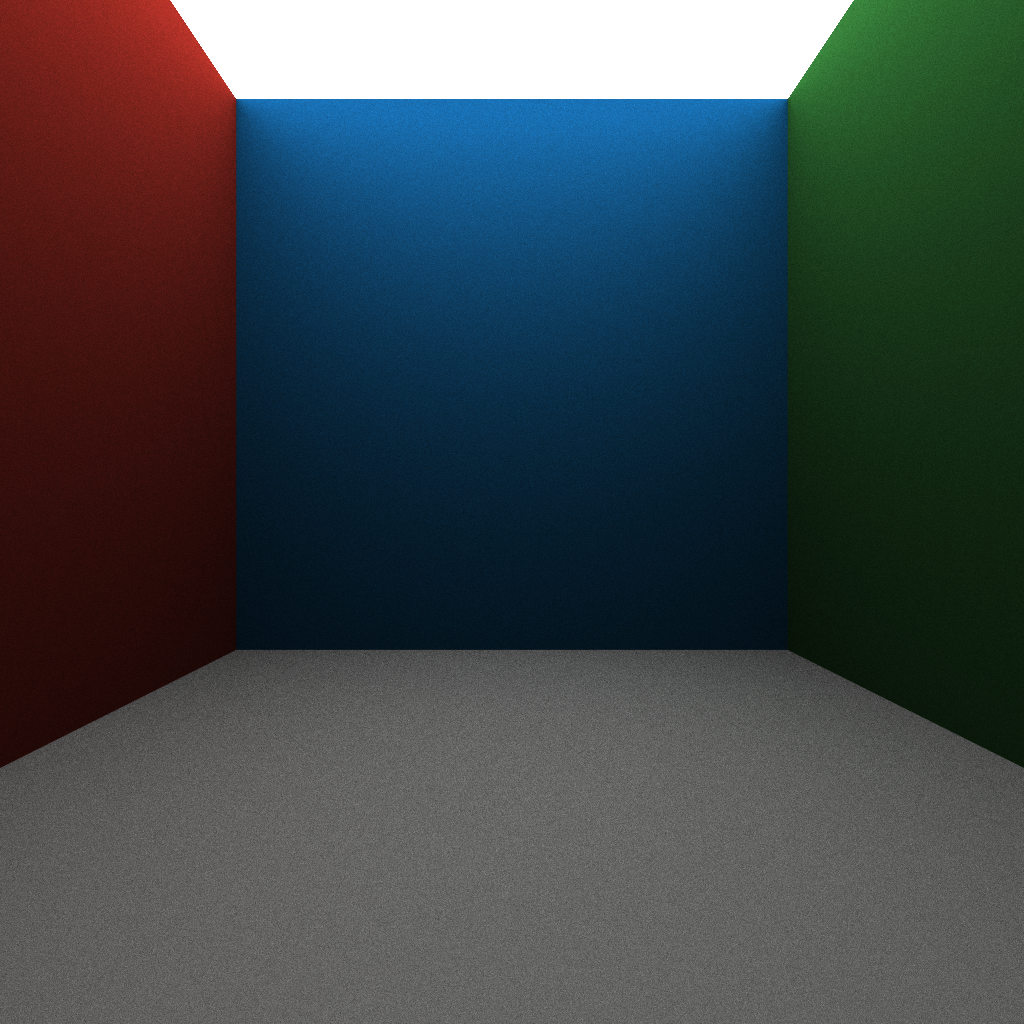 A basic empty room, with an emissive ceiling, a diffuse floor and walls. There
are no objects in the scene, and no reflections or refractions. This is the most
basic scene, and serves as a baseline for testing the best case performance.
A basic empty room, with an emissive ceiling, a diffuse floor and walls. There
are no objects in the scene, and no reflections or refractions. This is the most
basic scene, and serves as a baseline for testing the best case performance.
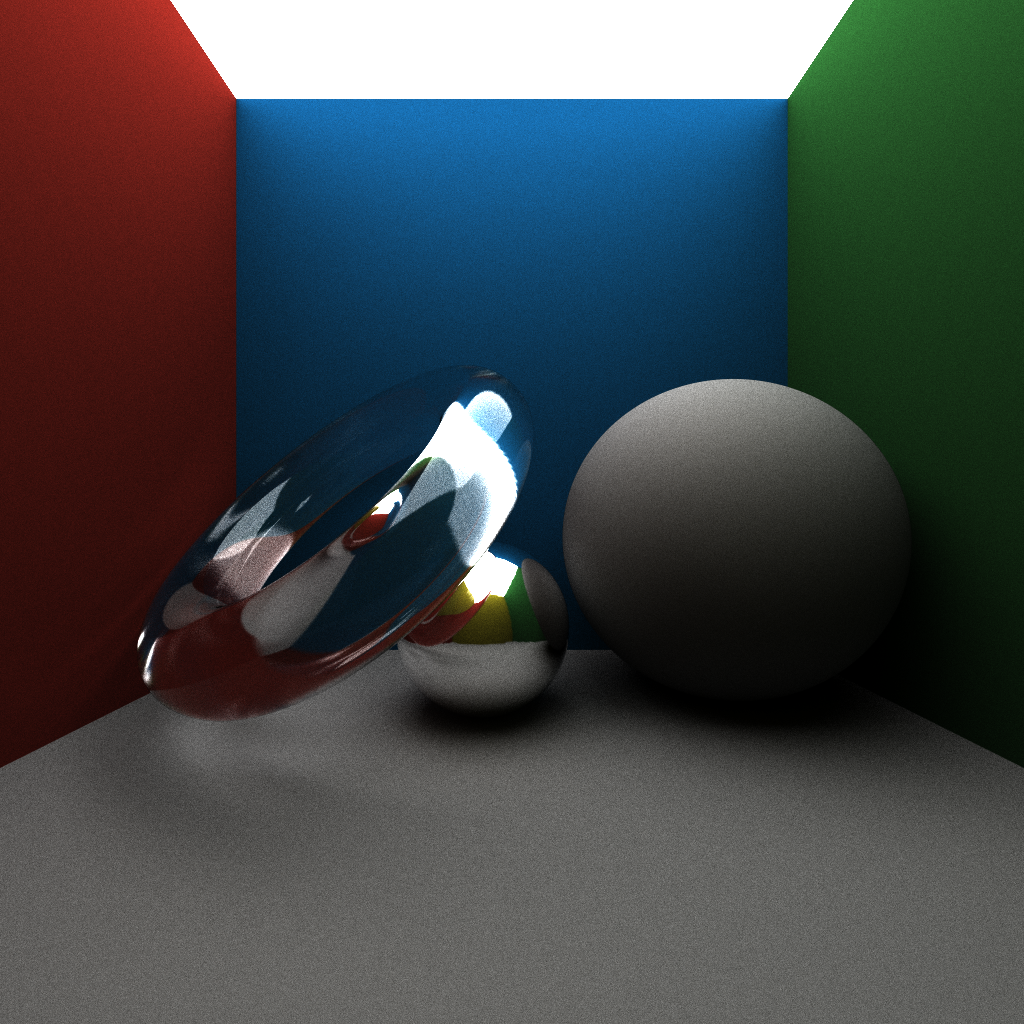 A basic scene extending the empty room. Now including three objects. A diffuse
white sphere, a reflective metallic sphere, and a glass torus. This scene is
still relatively simple, but include the main material types for testing the
BSDFs and the ray marching features.
A basic scene extending the empty room. Now including three objects. A diffuse
white sphere, a reflective metallic sphere, and a glass torus. This scene is
still relatively simple, but include the main material types for testing the
BSDFs and the ray marching features.
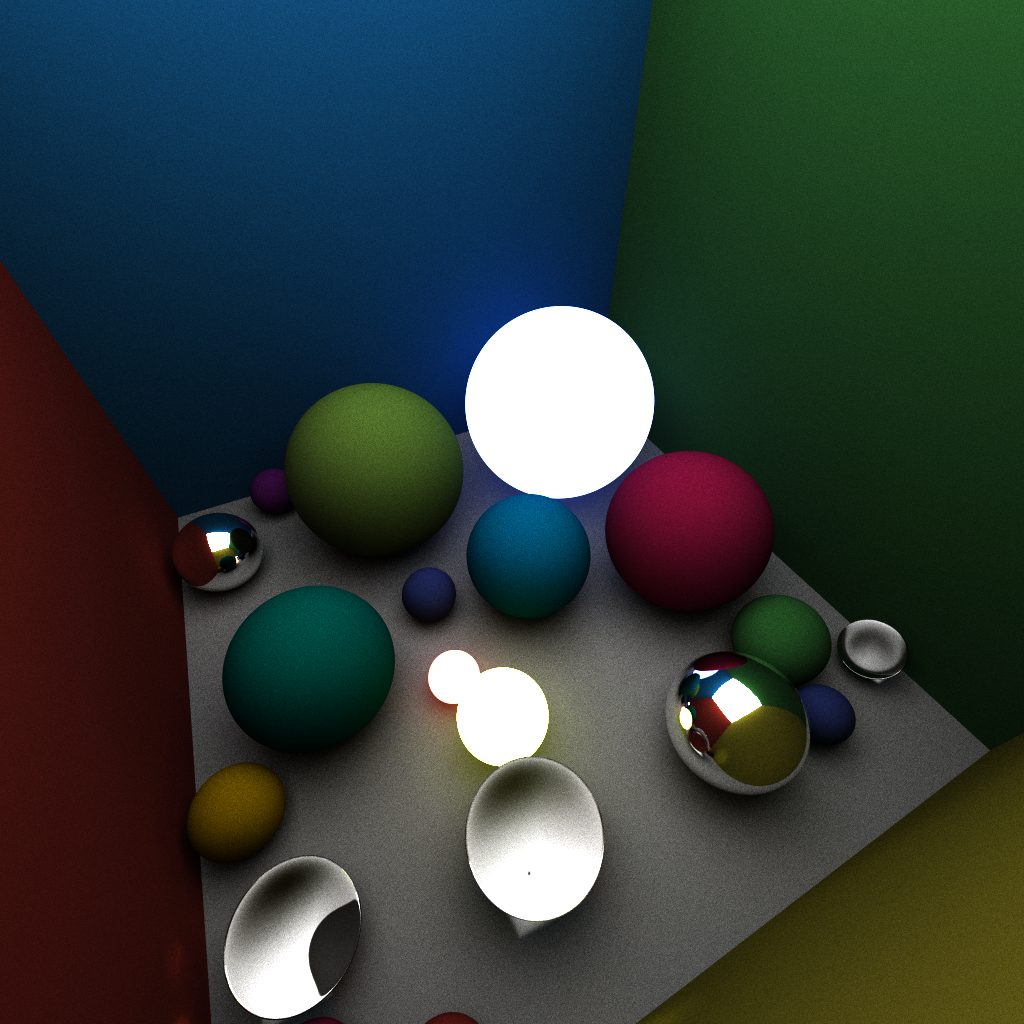 Extending the empty room, this scene includes 20 randomized spheres. 11 spheres
are diffuse, 3 are reflective, 3 are transmissive, and 3 are emissive. This
scene includes the most objects and is intended for measuring improvements
around many objects such as Bounding Volume Hierarchies (BVHs) with many
reflections and refraction bounces.
Extending the empty room, this scene includes 20 randomized spheres. 11 spheres
are diffuse, 3 are reflective, 3 are transmissive, and 3 are emissive. This
scene includes the most objects and is intended for measuring improvements
around many objects such as Bounding Volume Hierarchies (BVHs) with many
reflections and refraction bounces.
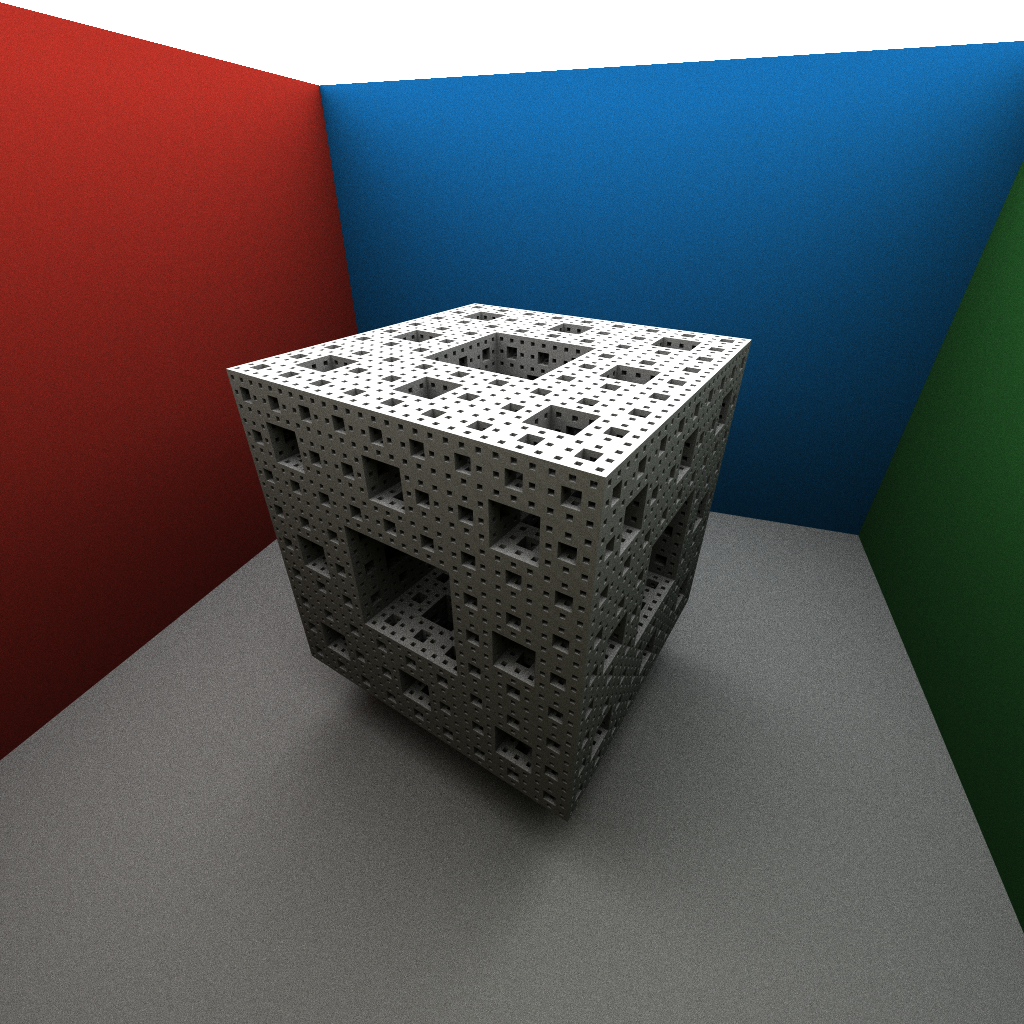 The Menger sponge is a classic fractal object, and is a good test for ray
marching specific features which cannot be easily implemented in a ray tracer.
The recursive nature of the object means that it has a lot of small details, and
requires many ray bounces to accurately capture the scene.
The Menger sponge is a classic fractal object, and is a good test for ray
marching specific features which cannot be easily implemented in a ray tracer.
The recursive nature of the object means that it has a lot of small details, and
requires many ray bounces to accurately capture the scene.
 The infinite Menger sponge, leverages the ease of replicating objects in ray
marching to create an infinite scene. This provides testing for ray marching
specific features, as well as extending the Menger Sponge scene as a torture
test with many details requiring many ray bounces to capture the scene.
The infinite Menger sponge, leverages the ease of replicating objects in ray
marching to create an infinite scene. This provides testing for ray marching
specific features, as well as extending the Menger Sponge scene as a torture
test with many details requiring many ray bounces to capture the scene.